
• “Polly want a cracker?” Lessons from DOJ press releases.

    parrot on tree limbThe Department of Justice issues a press release every time it enters into a settlement agreement of some kind. The foundations of accessibility law are the statutes and the cases applying them, but there are a lot of practical lessons to be learned from the settlements obtained by the DOJ, so it is worth looking at them.

    We can start with a result that seems startling, the case of the emotional support parrots.(4) United States v. Rutherford Tenants Corp. arose out of an apartment coop’s denial of the accommodation sought by one of the owners, Ms. Lesser, to keep a pair of emotional support parrots. The amount of the monetary award has grabbed headlines(5) because $165,000 in emotional distress damages is six or seven times the average award in fair housing cases in the Southern District of New York.(6) Understanding how this case ended up as a headline maker contains some important lessons for all owners associations.

    Accepting the allegations in the complaint as true, Ms. Lesser kept her parrots for at least 16 years without incident. Then, in 2015, there were a string of anonymous complaints about noise from the parrots. The New York City agency that investigates noise complaints did so fifteen times and found that while the parrots could be heard, the noise was not “loud, unreasonable or excessive.” A nuisance inspection similarly found no violation. Ms. Lesser also spent money adding soundproofing of various kinds to the apartment and notified the coop board that she was requesting an accommodation for her disability. The board refused to even consider the accommodation and, despite the lack of objective evidence of a problem, began eviction proceedings. Ms. Lesser moved out but continued paying maintenance and utility fees. When Ms. Lesser filed a complaint with HUD the coop board agreed to stay (but not dismiss) the eviction proceedings. However, a few months later it began including in the monthly maintenance charges its legal fees, which began at more than $60,000. After a few months it had the relative good sense to remove these additional charges. Ms. Lesser, apparently fed up, applied to sell her unit to a doctor who met any reasonable requirement for ownership. The board rejected the application without explanation. It sounds a lot like the board was mad at Ms. Lesser for asserting her rights.

    HUD found based on these facts there was cause to believe the board discriminated against Ms. Lesser based on her disability and retaliated against her for requesting a Fair Housing Act accommodation. That pushed the case to DOJ, who filed suit. From the docket sheet it is clear the coop fought the case with considerable vigor before finally agreeing to settle on the basis that it would pay Ms. Lesser $165,000 in damages, purchase her apartment for $585,000 (thus paying her a hundred thousand dollars more than she would have gotten from the rejected purchaser) and make a number of changes in the way it handled disability accommodation requests, including five years of reporting on its compliance to the Department of Justice.

    What lessons can be learned from this? The first is that owners association are subject to the Fair Housing Act. It is surprising how many owners association boards don’t know the FHA applies to them and that it may forbid them to enforce their rules. Second, don’t try strong arm tactics during a HUD investigation. When I see large awards in favor of someone who requested an accommodation it is almost always because the association or landlord tried to evict the resident after they requested an accommodation and/or began imposing substantial fines during the investigation. The time to evict or impose fines is after you persuade HUD that you were entitled to deny the accommodation.  A perfectly defensible denial of an accommodation request can easily turn into an impossible to defend claim of retaliation if an owner or manager decides to strictly enforce their rules before HUD has completed its investigation.

    That leads to the final lesson, which is that you cannot exercise economic leverage against someone who at least potentially has HUD and DOJ on their side. It costs nothing to file a complaint with HUD and if a claim seems to have any merit at all HUD will step in to stop an eviction and has the power to seek other kinds of injunctive relief as well. You can win a case brought by DOJ under the Fair Housing Act, but it won’t be by trying to outspend an agency with a budget of around $67 billion dollars a year. “She can’t afford to fight with us” is a phrase I’ve often heard, and it almost never turns out to be true.

    Now let’s turn to the ADA and the case of a chain of eating disorders clients alleged to have violated the ADA by refusing to modify their usual program to take into account the disability related dietary needs of a potential customer.¹ The DOJ press release announces an agreement requiring that the clinics be prepared to meet those needs by stocking foods that do not include what DOJ says are ingredients “commonly restricted for people with disabilities” including “sugar, caffeine, nuts, lactose or dairy products, gluten, eggs, soy, and fish/shellfish.” This seems obvious enough; if you are running an eating disorders clinic your customers are likely to be people who suffer from diabetes or other disabilities that restrict their diet. The customer got $15,000 for her trouble, which is within the common range for this kind of case.

    So how did a customer request for a special diet turn into a DOJ investigation and settlement? There is no way to know the whole story, but I think there is a clue in one sentence from the settlement agreement. The respondent:

    “agrees not to penalize or admonish or discourage a patient from requesting a modification.”

    A specific provision like this makes it sound like somebody on the staff didn’t just say “no” to a request, and decided instead to scold the customer for even asking. Depending on how proud the clinics are of their program it isn’t hard to imagine a staffer suggesting that if the customer didn’t like it she could go elsewhere. We can’t know what really happened, but it is the kind of behavior that turns a merely unhappy customer into someone willing to file a DOJ complaint.²

    The takeaway for all ADA Title III public accommodations is simple. If a customer claims to have a need based on a disability at least think twice about it before you turn down their request. It may be unreasonable or fall into the inventory exception³ for modification requests, but make sure you’ve thought about it before you say “no,” and never treat the customer badly in the process. The customer may not always be right, but the ADA requires that their requests at least be taken seriously.

    I’ll finish with a press release from October of 2023, that is very typical for cases involving alleged failures to design and build apartments to meet FHA accessibility standards. The owners and developers of 17 apartment complexes agreed to pay a total of $660,000(7) to settle claims the apartments did not meet the accessibility standards in the Fair Housing Act. The problems, which are very typical in this kind of case, involved sidewalks with excessive slopes, doorways that were too narrow and bathrooms that were too small. It is a little suprising that these problems existed because all of the 17 projects were funded with assistance from the Low Income Housing Tax Credit program. That program requires inspections to confirm the property meets FHA standards.

    What went wrong? The first lesson from this settlement is that developers should not rely on an inspection done to approve funding as protection from later litigation. Inspections for funding are usually pretty sensible. Apartments do not have to be perfect to be accessible and inspectors will pass a building that has a few units that don’t quite meet an FHA safe harbor; in fact, they almost never inspect more than a sample of the various units. If the plans meet FHA requirements the inspector may never see as built problems that occur in only a few of the units. When a complaint is filed, on the other hand, DOJ’s experts require perfection or something very close. Owners and developers looking for real protection against litigation need to understand the scope of their financing investigation and consider what additional inspections they may want to request on their own account.

    An equally important lesson; one that developers learn all the time, is that if the plans specify the absolute minimum required to meet FHA requirements then there will be features that fail to meet those requirements. Construction isn’t rocket science, and acceptable industry tolerances can easily create conditions that are within industry tolerances but not considered acceptable by DOJ. I defend these cases all the time and the same problems come up over and over again. Sidewalks are not specified to have the correct slopes and even if they are the sub-contractor that pours the sidewalks doesn’t think the difference between a 2% cross slope and a 3% cross slope matters. Somebody doesn’t know that a long sidewalk with an 8.33% slope needs to have handrails. Narrow doorways are very common because designers don’t fully understand that a standard 32″ door can be too narrow to meet the 32″ clearance standard in the FHA safe harbors. If bathrooms are specified to be exactly the minimum size necessary to meet FHA requirements then some of them will inevitably be a little too small, just as some will inevitably be a little too large. To design apartments whose as built condition meets an FHA safe harbor generally requires making everything a little bigger so the construction doesn’t have to be perfect.

    There you have it, three press releases, all with valuable lessons for businesses subject to the ADA and FHA. I’d like to say the overriding lesson is hire a good lawyer (hint hint) but it is really more basic. Know which laws govern the way you do business, and take compliance seriously. They say ignorance is bliss, but the bliss doesn’t last long if when it comes to the ADA and FHA.

    +++++++++++++++++++++++++++++++++++++++++++

    ¹ Eating Disorder Clinic Press Release

    ²  The customer must not have been too badly treated – the settlement calls for a payment to the customer of $15,000, which is very low compared to the cost of defending an ADA lawsuit brought by DOJ. Treating people really badly leads to very big settlement payments as shown by the press release issued only a few days earlier. FHA Sexual Harassment Settlement

    ³ DOJ regulations provide that public accommodations do not need to stock special inventory to meet the needs of disabled patrons. 28 CFR §36.307. Under some circumstances a public accommodation must be willing to special order goods for its disabled customers, so this exception requires some thought as well.

    (4) For the details read the Consent Decree at Emotional Support Parrots

    (5) See,Rutherford Co-op to Pay $165,000 for Violating Fair Housing Act

    (6) On this I’ll take the liberty of quoting from a brief I wrote on this subject:

    Courts performing reviews of jury verdicts in discrimination and retaliation cases have noted that with “so-called ‘garden variety’ mental anguish claims, … awards hover in the range of $5,000 to $30,000.” Bick v. The City of New York, 1998 WL 190283, at *25 (S.D.N.Y. Apr. 21, 1998); see also McIntosh, 887 F.Supp. at 668 (noting that at oral argument, counsel for the plaintiff conceded that the most common award of compensatory damages under the NYHRL ranged between $5,000.00 to $10,000.00) Fowler v. New York Transit Auth., 2001 WL 83228, at *13 (S.D.N.Y. Jan. 31, 2001), and see Rainone v. Potter, 388 F. Supp. 2d 120, 122 (E.D.N.Y. 2005) [“At the low end of the continuum are what have become known as “garden-variety” distress claims in which district courts have awarded damages for emotional distress ranging from $5,000 to $35,000.”]

    (7) This is large, but not surprising in a case involving a large number of apartment units where the money will be used in part for remediation.


    Share
  • Lactose intolerance, milk allergies and the ADA

    Dunkin' Donuts coffee cup logoI always think of donuts when I hear Dunkin Donuts, but of course now it is just “Dunkin” and coffee is at the top of their product line. Hence the coffee cup to the left, because we are back to alternative milk products and the ADA.
    The last time I blogged about this subject was in March, just after the attorneys representing plaintiffs in a lawsuit against Starbucks decided that Florida wasn’t the ideal place for their lawsuit and decided to re-file in California.¹ A month and half later a similar lawsuit against Dunkin’ Donuts, also filed in California, was dismissed in part for failure to state a claim with respect to whether the lactose intolerant plaintiffs had a disability as defined in the ADA. Garland v. Dunkin Donuts LLC, 2024 WL 2808653, at *5 (N.D. Cal. May 31, 2024). The court granted the plaintiffs leave to amend and they will presumably either provide sufficient details to meet the Iqbal / Twombly test for plausibility in alleging a disability or give up because they are not in fact disabled. The latter is very unlikely, though a strategic dismissal in search of a better venue can’t be counted out.

    This made me wonder just what allegation might be sufficient and so I poked around in the small world of litigation about lactose intolerance. My favorite use of the condition was one that isn’t really relevant here but was certainly creative. In Kral v. Temperato, 2014 WL 6083444, at *5 (E.D. Mo. Nov. 13, 2014) the plaintiff sued a Dairy Queen store because it did not meet the physical accessibility requirements in the ADA. Her disability was physical, but in the course of her deposition she apparently said she had not returned to the DQ store in question because, in part, of lactose intolerance. Seizing on this statement the defendants argued the plaintiff could not show a risk of future harm because she would not likely return to a store that featured dairy products. The argument was defeated by the plaintiff’s love of cheeseburgers, which was more than enough for the court to conclude she had shown a likelihood of return and therefore a likelihood of future injury.² Although it failed, the idea of using one supposed disability to defeat a claim based on a different disability is appealing.

    More seriously, I did find some judicial authority for the limits on lactose intolerance as a disability. Garner v. Walker, 2024 WL 1177975, at *3 (E.D. Mo. Mar. 19, 2024) was a lawsuit about a prisoner who claimed he was mistreated in a number of ways, including being denied a special diet because of his lactose intolerance. The case did not involve the ADA definition of disability, but did include medical testimony about the extent to which lactose intolerance might limit the major life activity of eating and digestion:

    Dr. Phillips also opined that according to UpToDate, an evidence-based online resource that is widely utilized by health professionals, it is recommended that patients with symptomatic lactose malabsorption should be advised that complete elimination of dietary lactose is not required and that restriction of their intake of lactose is often sufficient to treat symptoms of lactose intolerance.

    This certainly suggests that most lactose intolerance, even when it causes symptoms, is more an inconvenience than a disability.

    Lactose intolerance figured as well in Jackson v. Gordon, 145 Fed. Appx. 774, 776 (3d Cir. 2005)(unpublished). The question was whether the plaintiff had adequately alleged violations of the Eighth Amendment (cruel and unusual punishment) based on denial of a special diet. The Court of Appeals found that he had:

    Jackson alleged that he is severely lactose intolerant and allergic to eggs, that he was given “inadequate meals,” that “in order for [him] to eat food, he has to get food from other inmates via a ‘transportation device,’ which is disgusting and unsanitary,” that “this denial of a therapeutic diet is taking a serious toll on his health,” and that he suffers “constant hunger” from the “lack of proper nutrition.”

    This case was decided before Iqbal and Twombly, so the result might be different today, but it can at least be read to acknowledge the possibility that lactose intolerance can be a condition severe enough to limit the ability to eat and digest food. At the same time, the complaint was based on the unavailability of lactose free food, meaning there was no alternative for the plaintiff. In Title III ADA cases the plaintiffs can obtain nutrition in many ways that don’t involve lactose. In ability to eat may be a disability, but inability to eat one kind of food should not be.

    The Veterans Administration has also dealt with lactose intolerance as a service related disability. In Williams v. McDonough,  2023 WL 4838120 (Vet. App. July 28, 2023) the Court of Appeals for Veterans the plaintiff claimed to suffer from lactose intolerance. His claim was denied because his service records showed only a single instance of abdominal distress and lactose intolerance is a chronic condition that would cause more than a single problem. The Court of Appeals remanded for further findings, holding that the hearing examiner failed to consider evidence that the condition was chronic. The Court never reached the question of whether the lactose intolerance rose to the level of being a disability. A similar result was reached in Vaughn v. Shinseki, 2013 WL 3944492, at *7 (Vet. App. Aug. 1, 2013), adhered to on denial of reconsideration, 2013 WL 6050859 (Vet. App. Nov. 15, 2013). The case was remanded with instructions that the veteran be provided an examination to determine whether he did in fact have lactose intolerance, in this case as a secondary effect of diabetes (which is undoubtedly a disability).

    These probably don’t represent the full range of cases in which lactose intolerance has been litigated, but decisions before the 2008 ADA Amendments are no longer really relevant. I found no cases referring to medical evidence except Garner v Walker, and that case is consistent with what my own research found; that is, lactose intolerance is a term that covers a range of conditions, many or most of which are not disabilities. I’ll update this when the next round of milk alternative decisions are handed down.

    ++++++++++++++++++++++++++++++++++++++++++++

    ¹ See, Starbucks Again.  As they say, if you don’t like Disney World, you can always try Disneyland. The Starbucks case is ongoing.

    ² I worked at a DQ in high school and agree that the cheeseburgers are worth going back for.


    Share
  • Loper Bright v Raimondo – the demise of Chevron may change FHA disability litigation.

    In Loper Bright Enterprises et al v. Raimondo, Secretary of Commerce et al, Case No. 22-451 (June 28, 2024) the Supreme Court overruled Chevron U. S. A. Inc. v. Natural Resources Defense Council, Inc., a case that, as one commentator observed, was the foundation of the administrative state.¹ At first glance this decision has little to do with private Fair Housing Act litigation based on disability discrimination. Chevron created a rule requiring deference to regulations, and HUD’s regulations implementing the requirements in 42 U.S.C. §3604(f) are, for the most part, uncontroversial. Unfortunately, many courts have applied Chevron not only to HUD’s regulations, but also to its less formal statements and guidances when deciding how to interpret the Fair Housing Act. By taking Chevron off the table Loper Bright should eliminate the sometimes slavish reliance on HUD’s various statements and guidances. That could change litigation under Section 3604(f) in important ways.
    To get an idea of the difference Loper Bright should make we can look at Fair Hous. Rights Ctr. in S.E. Pennsylvania v. Post Goldtex GP, LLC, 823 F.3d 209, 216 (3d Cir. 2016). In Post Goldtex the Third Circuit considered whether a previously occupied building that was converted to housing after the effective date of the FHA design/build requirements was covered by those requirements. The statute says it applies to buildings with “first occupancy” after the effective date of the requirements. In Post Goldtex both sides of the case argued “first occupancy” had the meaning they preferred, the plaintiff arguing that it meant first residential occupancy and the defendant arguing it meant first occupancy for any purpose. HUD’s regulatory definition of “first occupancy” favored the defendant, for it defined the term as first occupancy for any purpose. Thus, the old commercial building converted to condominiums after the effective date of the design/build requirements was not constructed for “first occupancy” after the effective date. The Third Circuit briefly considered the arguments for both sides, but ultimately deferred to HUD’s regulatory definition, citing Chevron.

    We don’t know where the court might have come down on the issue without Chevron deference, but we do know the court believed the phrase “first occupancy” had an uncertain meant because Chevron was never supposed to apply if the meaning of the statute of was clear. Thus, a different result was certainly possible. Equally important, with Chevron gone every court that considers this issue is now free to reach its own result, increasing the odds of inconsistent decisions.³

    At the trial court level Chevron has been applied more broadly to justify deference not only to HUD regulations, but also to HUD’s less formal statements. In U.S. v. Edward Rose & Sons, 246 F. Supp. 2d 744, 751 (E.D. Mich. 2003), aff’d in part, 384 F.3d 258 (6th Cir. 2004) the trial court, after invoking Chevron deference as a kind of general obligation to follow agency interpretations, relied on language in the preamble to proposed regulations to conclude that the front entrance to a facility was required to be accessible even if another accessible entrance was available. The Sixth Circuit affirmed, but did so based on the plain meaning of “common area” as used in the statute itself, declining to consider whether statements in HUD’s preamble were entitled to deference. This might be considered a save from the standpoint of legal analysis, but of course most cases are not appealed and the trial court’s decision is the only one that matters. It is also the one most often cited for the notion of deference to HUD statements that are not in the actual regulations.

    A more consequential reliance on Chevron can be found in U.S. v. Noble Homes, Inc., 173 F. Supp. 3d 568, 573 (N.D. Ohio 2016). The question was whether a housing unit with a basement was a multi-story unit and therefore not covered by the FHA design/build requirements. The court recognized that HUD’s Fair Housing Act Guidelines were not mandatory, but nonetheless cited Chevron as its justification for using the Guidelines to decide that the basements in question did not make the units multi-story units. Plaintiffs often cite Nobel Homes for the proposition that anything HUD says about how the Fair Housing Act applies in litigation is controlling.

    Noble Homes relied on an earlier equally important case, The Sec’y, United States Dep’t of Hous. & Urban Dev., on Behalf of Montana Fair Hous., Inc., Charging Party, & Montana Fair Hous., Inc., Intervenor, HUDALJ 05-068FH, 2006 WL 4573902, at *5 (Sept. 21, 2006). This was a HUD administrative proceeding the decision in which is commonly referred to as the “Nelson Memorandum” after the Respondents in the case. In the Nelson Memorandum HUD announced a burden shifting procedure under which a plaintiff could make a prima facie case of discrimination based on a violation of the design/build requirements by simply showing some deviation from the specific technical requirements in the Guidelines. The burden then shifted to the defendant to provide evidence that despite this deviation the property met the very general requirements in Section 3604(f)(3)(C). Only if the defendant could do this was the plaintiff required to prove a violation of Section 3604(f)(3)(C). The Ninth Circuit affirmed, finding that: “The Secretary’s application of the burden shifting scheme was not arbitrary or capricious.” Nelson v. U.S. Dept. of Hous. and Urb. Dev., 320 Fed. Appx. 635, 638 (9th Cir. 2009)(unpublished).

    The Ninth Circuit’s decision does not, it should be noted, hold that HUD’s burden shifting scheme for administrative proceedings should be applied in private actions in federal court or even that it is the correct way to approach the burden of proof. All the Ninth Circuit says is that application of this burden shifting scheme is not arbitrary and capricious as applied in HUD administrative proceedings.

    The Nelson Memorandum is consequential because many courts apply this burden shifting scheme in design/build litigation brought in federal court by DOJ and private plaintiffs. This makes it very easy for a plaintiff to shift the burden of demonstrating accessibility to the defendant. After all, there is no such thing as a significant construction project that has no flaws. Even if the plans for an apartment complex perfectly specify compliance with all of the Guidelines or some other HUD safe harbor, there will inevitably be “as built” discrepancies such as a countertop that is a half inch too close to the opposing countertop, or a toilet a half inch off of the 18″ centerline requirement. Sidewalks can easily have a cross slope of 2.5% when 2% is the standard just as a ramp may have a slope of 9% when 8.3% is the maximum. A plaintiff who finds a single error of this kind has, under the Nelson Memorandum burden shifting analysis, proved their case unless the defendant can provide evidence that none of the discrepancies affects accessibility.

    For defendants this may prove a difficult or impossible burden to meet. The plaintiff can prove its case with nothing more than an expert with tape measure and a digital level. The defendant, on the other hand, must find an expert qualified to testify that a 2.5% inch cross slope or a 39.5″ clear space won’t interfere with the use of the apartment by those with mobility disabilities. The standards in the Guidelines were based on ANSI A117.1 (1986) which were ultimately based on studies in the 1950’s sponsored by the Easter Seals Research Foundation at the University of Illinois. ² These were updated periodically, sometimes with HUD sponsorship, but ultimately represent the opinion of the various groups involved that the standards meet the needs of most disabled individuals most of the time using technology like the wheelchair as it existed more than 60 years ago. Digging out the sources of the compromises made and the scientific studies that justified those compromises is a job few experts could do at any reasonable cost in a reasonable time. The Nelson Memorandum, if given Chevron deference, guarantees that FHA design/build plaintiffs will be able to prove a design/build violation without any proof at all that the condition is in fact a barrier to access for those with disabilities or to the plaintiff.

    Of course even when Chevron was still good law applying it to the burden shifting scheme in the Nelson Memorandum was an improper use of the doctrine. It was also inconsistent with the Fair Housing Act’s very clear refusal to establish any kind of minimum technical standard for accessibility. See U.S. v. Mid-Am. Apt. Communities, Inc., 247 F. Supp. 3d 30, 33 (D.D.C. 2017). The impropriety of using Chevron deference for anything other than regulations has also been recognized in cases like U.S. v. Taigen & Sons, Inc., 303 F. Supp. 2d 1129, 1142 (D. Idaho 2003). Nonetheless, many district courts have treated every kind of HUD statement about an issue as if such pronouncements came from the Supreme Court itself. This includes refusing to allow proof of accessibility by reference to a HUD approved safe harbor unless the property perfectly meets the requirements of that safe harbor.  This is based on the Joint Statement of the Department of Housing and Urban Development and the Department of Justice, Accessibility (Design and Construction) Requirements for Covered Multifamily Dwellings Under the Fair Housing Act (April 30, 2013), which requires proof that the property complies with a single recognized safe harbor. Courts also sometimes rely on HUD’s various guidances on assistance and service animals, such as FHEO-2020-01, once again based on some general notion that what HUD says is law. Reliance on HUD’s non-regulatory guidances, internal memoranda and the like always favors the plaintiff because HUD is an agency whose mission is to maximize the availability of housing to those with disabilities, not the careful interpretation and application of the language of the Fair Housing Act itself.(4)

    Loper Bright does not mean, of course, that the courts should simply ignore what the Administration says about the laws it is supposed to implement. In Loper Bright the Supreme Court acknowledged and left in effect Skidmore v. Swift & Co., 323 U. S. 134 (1944). In Skidmore the Supreme Court recognized (as described in the Lober Bright opinion):

    that the “interpretations and opinions” of the relevant agency,“made in pursuance of official duty” and “based upon . . . specialized experience,” “constitute[d] a body of experience and informed judgment to which courts and litigants [could] properly resort for guidance,” even on legal questions. Id., at 139–140. “The weight of such a judgment in a particular case,” the Court observed, would “depend upon the thoroughness evident in its consideration, the validity of its reasoning, its consistency with earlier and later pronouncements, and all those factors which give it power to persuade, if lacking power to control.” 

    Whether and to what extent HUD’s regulations, guidances and other pronouncements should be given any weight must depend on the document at issue. The Nelson Memorandum, which expresses HUD’s opinion about how a plaintiff can make a prima facie case of discrimination, ultimately rests on notion that HUD’s non-binding safe harbor determinations should be treated as mandatory in effect.  This is not only inconsistent with the concept of a safe harbor, it also ignores the fact that different safe harbors have different requirements. If two different technical standards can both meet the requirements of the Fair Housing Act then the Fair Housing Act’s requirements can clearly be met in more than one way. And, if the FHA requirements can be met in multiple ways it is a matter of logic to conclude that proving a failure to comply in one way is not proving a failure to comply in general.

    HUD’s guidance concerning service and assistance animals, FHEO-2020-01, also fails the Skidmore test for useful guidance. With respect to assistance animals FHEO-2020-01 must ultimately rest on an evaluation of how individuals with every kind of disability imaginable might be helped by an untrained animal in a way that improves their equal access to housing. There is no reason to believe HUD has the required expertise to make this determination. HUD’s sister agency, the Social Security Administration, does not accept evidence of disability from many of the professionals HUD says can be relied on for a disability determination. The Department of Defense conducted a thorough and expensive study of the effectiveness of assistance animals for individuals with PTSD and could not reach a conclusion that they were effective. HUD does not appear to have conducted any scientific studies of its own and does not seem to have referred to any of the relevant scientific literature concerning assistence animals. Instead, consistent with HUD’s political agenda, HUD’s concern was making it as easy as possible for those with disabilities to obtain housing despite “no pet” rules or pet deposit requirements. An analysis using Skidmore criteria leads to the conclusion that this guidance can and should be ignored by federal courts.(5)

    A complete exploration of when HUD’s regulations, guidances and similar documents do and do not make sense in light of the language of the statute and available scientific or other evidence would take more time and space than this blog allows. What Lober Bright tells us is that the courts are now free to treat regulations, guidances, internal memoranda and the like as nothing more than an agency opinion whose usefulness cannot be presumed, but must be proved. This should have a significant impact on litigation under Section 3604(f) because, while Loper Bright does not overrule earlier cases that properly applied Chevron deference it certainly demonstrates that any earlier case that relies on HUD’s various statements is entitled to respect only to the extent its conclusions can be justified by Skidmore analysis or an independent analysis of whether HUD got it right.

    ++++++++++++++++++++++++++++++

    ¹ See,The Chevron Doctrine is Dead

    ² See, ANSI A117.1 History and see the introduction to ANSI A117.1 in each of its later editions.

    ³ The Loper Bright decision is careful to say that it does not overrule any earlier case applying Chevron deference, but it does not exclude courts in one circuit from disagreeing with the conclusions of a different circuit that would not be binding in any case.

    (4) There is nothing improper about a regulatory agency trying to implement the policy behind a statute in ways with which the courts may disagree. The point of Lopez Bright is simply that agency interpretations are not entitled to deference when they do so.

    (5) Housing providers cannot ignore it, because no matter what the courts say, HUD will follow this guidance in its investigation of discrimination complaints. A victory in federal court costs more money than many housing providers will think are justified by the nuisance of fake assistance animals.


    Share
  • Grants Pass v Johnson – is homelessness an ADA issue?

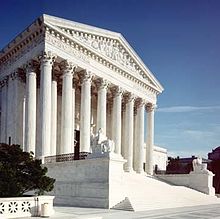
    first page of Supreme Court opinionIn City of Grants Pass, Oregon v. Johnson et al, Case No. 23-175 (June 28, 2024) the Supreme Court, after a very long discussion, found that the prohibition on cruel and unusual punishment in the Eighth Amendment does not forbid cities from passing laws that prohibit public camping. The legal reasoning is simple. The Eighth Amendment covers what happens after a person is convicted of a crime, not what happens before. Thus, it does not cover what can be made illegal in the first place.

    Along the way the Court observes that there are many causes of homelessness, including among others mental illness and drug addiction. As a lawyer who spends his time thinking about the ADA my immediate response was that there are ADA implications. Title II of the ADA prohibits discrimination against those with disabilities by cities and other non-federal governmental authorities. The ADA regulations say this requires that:

    A public entity shall make reasonable modifications in policies, practices, or procedures when the modifications are necessary to avoid discrimination on the basis of disability, unless the public entity can demonstrate that making the modifications would fundamentally alter the nature of the service, program, or activity.¹

    Mental illness is often a disability, and it isn’t hard to imagine the argument that enforcement of a no-camping law should be modified because the effect of such laws falls most heavily on those whose mental illness is the cause of their homelessness.

    This isn’t a novel idea. In Ravenna v. Village of Skokie, 388 F. Supp. 3d 999, 1003 (N.D. Ill. 2019) the District Court found a mentally woman stated a Title II claim when she was arrested for disorderly conduct that was caused by her mental illness even though the Village knew she was mentally ill. In Durr v. Slator, 558 F. Supp. 3d 1, 32 (N.D.N.Y. 2021), the District Court summarized earlier decisions to conclude that Title II might be violated when “police wrongly arrest someone with a disability because they misperceive the effects of that disability as criminal activity.” If a person is homeless because of mental illness and therefore won’t seek shelter provided by a third party and must sleep somewhere a town or city should arguably modify enforcement of a “no camping” law to permit sleeping in a public place without criminal penalties.

    There are, of course, a host of practical problems. The Supreme Court observed that homelessness has many causes, many of which are not related to any kind of disability. Homeless encampments presumably include individuals who are not disabled, and sorting out the disabled from the not disabled isn’t likely to be easy. There is also the “fundamental alteration” exception to the accommodation policy and the argument that no matter what the cause of homelessness, making an exception to enforcement of a no-camping law would do what it has in fact done in many cities; that is, make public places unusable by ordinary citizens who are not homeless. Those are, however, the kinds of problems of which Justice Gorsuch says:

    Through their voluntary associations and charities, their elected representatives and appointed officials, their police officers and mental health professionals, [the American people] display that same energy and skill today in their efforts to address the complexities of the homelessness challenge facing the most vulnerable among us.

    I am sure that in the wake of Grants Pass v Johnson advocates for the homeless will be looking for ways to at least exempt those with disabilities from no public-camping laws just as cities and municipalities look for reasons to enforce those laws against everyone, including the disabled. What almost certainly will not happen is that federal judges will be disentangled from ruling on questions of public policy. Justice Gorsuch, citing Justice White’s dissent in the Robinson case wrote that:

    Nor can a handful of federal judges begin to “match” the collective wisdom the American people possess in deciding “how best to handle” a pressing social question like homelessness. 

    Unfortunately, Congress has, in essence, delegated a large swath of public policy concerning those with disabilities to the courts because the courts are the ultimate decision makers with respect to what the ADA requires. This is always good for lawyers. Whether it is good public policy is a question that could not even be adequately discussed in the space of a thousand blogs like this one.

    ++++++++++++++++++++++++++++++++++++

    ¹ 28 CFR §35.130(b)(7) 


    Share
  • ADA Title II website regulations – is cyberspace a place?

    Seal of Department of JusticeI should begin by acknowledging that this is an editorial, not news. The news is simple – Title II entities must over the next few years bring their websites and mobile apps into conformance with WCAG 2.1 AA. The question is whether requiring that is a good way to do what the ADA is supposed to do in terms of delivering equality of opportunity to those with disabilities.

    In my last blog I looked at the problems associated with defining disability discrimination in terms of conformance to a technical standard that cannot in practice be consistently met by modern websites.² That problem is compounded in the new regulations by the restrictions imposed on alternate conforming versions of a web page. As DOJ explains: “conforming alternate versions are permissible only when it is not possible to make web content directly accessible due to technical or legal limitations.” Note the words “not possible,” which is to say “impossible.” Since everything is possible given money and time there is in effect no exception at all.

    The rationale for this restriction is the fear that while alternate conforming versions are by definition perfectly equal to the original web page, DOJ doesn’t think Title II entities will do what this requires: Here is what DOJ says:

    As WCAG 2.1 defines it, a conforming alternate version is a separate version of web content that is accessible, up to date, contains the same information and functionality as the inaccessible web content, and can be reached in particular ways, such as through a conforming page or an accessibility-supported mechanism. However, the Department is concerned that WCAG 2.1 could be interpreted to permit a segregated approach and a worse experience for individuals with disabilities. The Department also understands that, in practice, it can be difficult to maintain conforming alternate versions because it is often challenging to keep two different versions of web content up to date. For these reasons, as discussed in the section-by-section analysis of § 35.202, conforming alternate versions are permissible only when it is not possible to make web content directly accessible due to technical or legal limitations.

    Let’s break this down.

    First sentence – WCAG 2.1 requires that alternate conforming versions provide all the same information and functionality as the original version. In other words, an alternate conforming version provides equality of program access, which is exactly what the ADA requires for Title II entities.Providing an alternate conforming version as defined in WCAG 2.1 perfectly satisfies the ADA’s requirement of equal opportunity for those with disabilities.

    The third sentence reveals DOJ’s arrogance in matters of technical regulation. WCAG 2.1 AA, including the use of alternate conforming versions, was developed by the World Wide Web Consortium, which brings together the most sophisticated and most knowledgeable institutions and people involved in web design from around the world. WCAG 2.1 AA allows alternate conforming versions precisely because the best technical minds in the world think it can be done. DOJ’s collection of lawyers and bureaucrats disagrees. Perhaps they are right, but it hardly seems reasonable for an agency like DOJ to simply throw out a possibility created by W3.

    DOJ’s real problem with alternate conforming versions is found in the second sentence.  DOJ is “concerned” that allowing alternate conforming versions will be interpreted to permit a “segregated approach and a worse experience.” The “worse experience” part of this sentence doesn’t make sense. If the alternate conforming version provides a “worse experience” with respect to access to content and functionality then it isn’t an alternate conforming version anymore. Equality is built into the definition of alternate conforming version. If by “worse experience” DOJ is comparing the experiences of those with and without disabilities then it doesn’t make sense at all. Those with disabilities will always have a different experience of a website than those without, but that is true of  experiencing the world as a whole. I do not have the same experience of the world as a person who is blind or deaf or confined to a wheelchair. I may think their experience is “worse” than mine, but that is the kind of value judgment based on my perspective as a seeing person about the experiences of others that leads to irrational discrimination against those with disabilities. The notion of a “worse” experience only reinforces discriminatory attitudes and has to be rejected.

    That brings us to “segregated approach,” which is, I think, DOJ’s real problem with alternate conforming versions. To understand this it is helpful to go back to Olmstead¹, a case in which the Supreme Court found that state and local governments could not unnecessarily segregate those with disabilities from others. In other words, you can’t just put everyone with a disability in a special facility, no matter how nice that facility might be or how much those without disabilities think it is good for those with disabilities. DOJ is concerned that sending those with disabilities to an alternate conforming version of the main web page is like sending everyone who is deaf to a special facility for the deaf, or everyone who is blind to a segregated school for the blind.

    Segregation is bad and it is among the things the ADA is intended to eliminate; however, it doesn’t make any sense to think of a website as a place where people might be segregated. A website is a computer program(5) that interacts with a user using a computer. A mobile app is a computer program that interacts with a user using a mobile device. The user’s experience is delivered by what amounts to the facade of the website. For a sighted user that facade is the screen, keyboard and mouse. For a blind user it is speech from screen reading software plus the keyboard. For both, if the website functions as intended, what happens behind that facade is irrelevant to their experience. A blind user who interacts with an alternate conforming version of a web page won’t have an experience that is different in a meaningful way from their interaction with a main web page that meets WCAG 2 AA standards because they don’t, and in fact cannot, know what is happening behind the facade.  The whole point of alternate conforming versions is they must, by definition, deliver the same interactive experience as the main web page to the extent the user’s disability allows it.

    This point is easy to see if you compare the experience of going to a movie with the experience of seeing a movie on a website. A deaf person who goes into a theater sees the other patrons, maybe smells them as well, bumps into people who sit too close and may have to stretch to see over someone taller. The deaf person cannot hear, but with captions they can come as close as technology allows to having the same experience as everyone in the room. If that same deaf person logs in to their computer or phone to watch a movie they will see the images and can read the captions, but they will not have the experience of being in a crowd.  There may be a million other people watching the same movie at the same time, but the deaf person will never see, smell or touch them. It would be wrong to segregate the deaf movie goer in the real movie theater because it would deny them as much of the shared experience as their disability permits. It doesn’t matter if they are “segregated” by having the movie delivered from one web page instead of another because there is no shared experience to lose.

    DOJ’s objection to alternate conforming versions is ultimately ideological. DOJ believes that because segregation is bad, providing two doors into the same room cannot be allowed even if creating two doors is much easier and cheaper than trying to make one door that everyone can fit through. Like many decisions driven by ideology this one is more likely to diminish the usefulness of the internet for everyone than to improve its usefulness for those who are disabled. In many cases the easiest way to make a single webpage conform to WCAG requirements is to reduce its complexity and functionality, because the less it does the fewer things must be done to meet those requirements. Adopting a complex technical standard of accessibility for websites, and then denying Title II entities the option of meeting that standard in a way that the standard itself recognizes as acceptable is simply a bad way to implement the equality mandate of the ADA. The ADA was not intended to create equality by bringing everyone down to the same low level of participation in the economic and social life of the United States. It was instead to raise the ability of those with disabilities to equality with the current standards enjoyed by those who are not disabled. Alternate conforming versions do just that, and if an alternate conforming version of a web page is the simplest or cheapest way to improve access for those with disabilities, no Title II entity should be forbidden to that technique for delivering programs and services.

    +++++++++++++++++++++++++++++++

    ¹ Olmstead v. LC, 527 U.S. 581 (1999).

    ² The proof of this, as I noted in my last blog, is that DOJ and the rest of the federal government have not been able to meet the WCAG 2.1 AA standard despite having had several years to implement it.

    ³ A blind person will never see the pictures. A deaf person will never hear the sounds.

    (4) Treating the website as a “program” of the local government.

    (5) That’s an oversimplification, but it is true in essence.


    Share
Richard Hunt, author